Ilaria Marsili Rome Tours
  • Home
  • Rome Tours
    • Tours >
      • Ancient Rome
      • Vatican City
      • Piazzas & Fountains Walking Tour
      • Food Tours
      • Rome With Kids
      • Cruise Visitors
      • Catacombs & Old Appian Way
      • The Underground City
      • The Great Basilicas
    • In Depth Tours >
      • Daily Life in Ancient Rome
      • Trekking along the Aurelian walls
      • Ancient Versus Modern Rome
      • Medieval Rome
      • Walk Out of Tracks
      • On the Footsteps of the Romantic Poets
      • Borghese Villa and Park
      • Roman Movies Tour
    • Outside the City >
      • Tivoli Tour, Villa Adriana & Villa D'Este
      • Ancient Ostia
  • #Rome
  • Blog
  • Contact Me
  • About Me
    • Ilaria
    • Testimonials on Trip Advisor
    • photo gallery
  • Resources
    • Meeting the Pope
    • Suggested Hotels
    • Recommended Restaurants
    • Suggested Italian Guides
  • Basic Italian Dictionary
  • Archeological Sites
  • Museums and Art Galleries
    • Vatican Museum

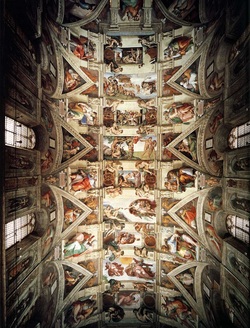
Michelangelo’s Assistants in the Sistine Ceiling

2/10/2015

Comments

 
Picture
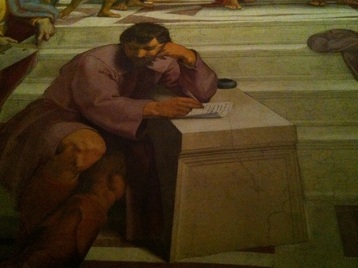
The legend of Michelangelo being a lonely painter taking care of the strenuous work of painting alone the 12.000 square feet of the Sistine chapel is not true.

When Michelangelo got the commission he was an extremely skilled sculptor but initially lacked familiarity with the complex fresco technique.  

He also had still in mind the project of the tomb of Julius II and it’s believed he wanted to delegate a large part of the  pictorial execution to assistants.

Michelangelo got a Florentine friend that he trusted: his name was Francesco Granacci.

The 2 artists had studied together in Ghirlandaio workshop and in the garden of San Marco, that Michelangelo eventually entered thanks to Granacci's advise. Granacci never begun a very renewed painter.

He was unambitious, an easy living man and had a relaxed temper. In fact he specialized in less important decoration as theatrical scenery, banners for churches and knights, triumphal arches for parades.

Granacci’s  lack of desire for glory was engaging for Michelangelo.  Granacci easily acknowledged his supremacy, there was not artistic competition.

He entrusted Francesco Granacci to recruit the assistant he needed in Florence.


Read More
Comments

The Circus Maximum Dimensions

2/7/2015

Comments

 
Picture
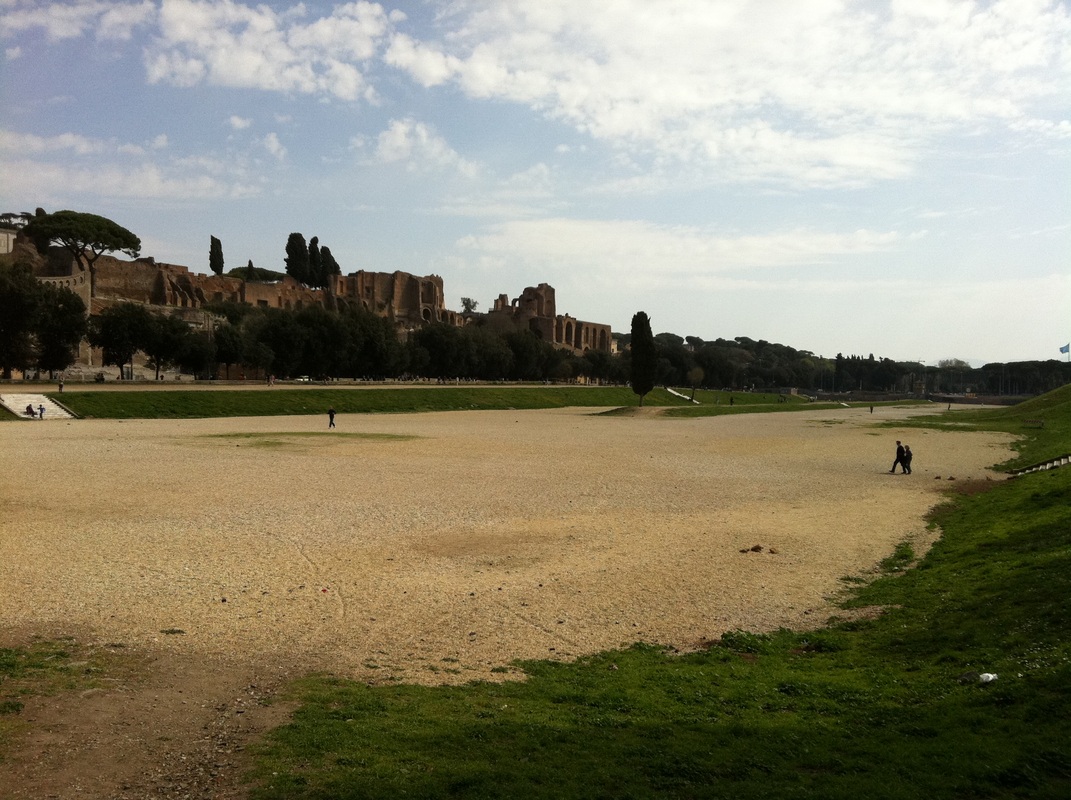
The length of the structure was 620m and between 140-150 meters wide.

The seating surrounded the all of the arena with steps that were 1400m long.

Each row could house 3500 spectators. The seats were 40am wide, 50cm in dept and the height of the step was 33cm.


There were probably about 50 rows of seats summing up at least 150000 spectators.

The racetrack was 550-580m long and 80m wide, with a total surface of 44.000square meters (12 times more than the coliseum).
The track was covered with the finest sand, aimed to absorb easily the rain in case of bad weather and not to lift too much dust on the audience.
 

The ‘spina’ : the central path around which the chariots were turning  was 340 m long.

In the Circus Maximus men and women sat together, it was an opportunity  to start new love affairs…


Comments

The Colosseum Dimensions

2/7/2015

Comments

 
ImmagineGreat picture by Pablo Corona
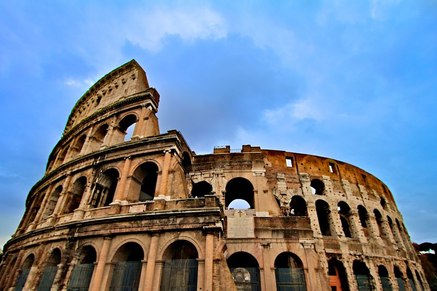
The perimeter of the coliseum is 527 meters.

The axis are 188 m and 156 m

The arena's axis are 80m and 54m; 


The arena covers a surface of 4000 square meters.

The high of the structure is 52 meters.


The Circus Maximus was 3 times larger.


Comments

Michelangelo and Raphael

2/7/2015

Comments

 
Picture
The two painters had very distant personalities. Raphael was sociable and courtly while Michelangelo was a solitary man.

We know they  once met in Saint Peter square: Michelangelo was alone, while Raphael was surrounded by many pupils and admirers.

Michelangelo said to Raphael: ' you, with your band, like a bravo'
Raphael replied: 'and you alone, like the hangman'.

Comments

The Portonaccio Sarcophagus

2/7/2015

Comments

 
Picture
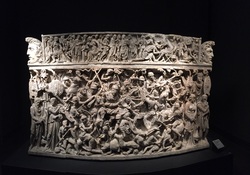
This extraordinary sarcophagus was found in 1931 near the Tiburtina road, just outside the ancient city of Rome. It can be dated to 180AD.
It  shows the scene of a battle, staged on two levels rendered in a very vivid way.
The winning Romans can be seen in the upper level while the defeated barbarians are humiliated and defeated below them.


A roman horseman, in the centre- surely the owner of the tomb, is depicted in the guise of universal victor.

The top part of the coffin also celebrates the dead man and his wife: The woman exercises her virtues in the house, weaving and educating the children; while the man, after his warlike activities, receives the submission of the enemies.


Read More
Comments

Head of Isis

2/7/2015

Comments

 
Picture
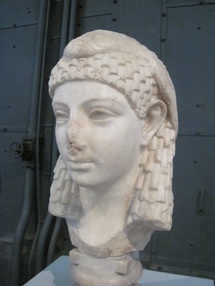
This is a late Hellenistic artwork  made in pentelic marble, the one of Athens.  
It was found in 1886 on via Labicana, not far away from the coliseum on the slopes of the esquiline  hill.
 
The ancient regional catalogues –lists of sites within an Augustan region- dating back to 2000 years ago, reported the presence of an  Iseum, or temple of Isis. The head was in the temple, I believe.

It’s exquisite and very charming. Now it’s location is the Centrale Montemartini museum in Rome.


​Centrale Montemartini museum


Comments

The Map Gallery in the Vatican Museum

2/7/2015

Comments

 
Picture
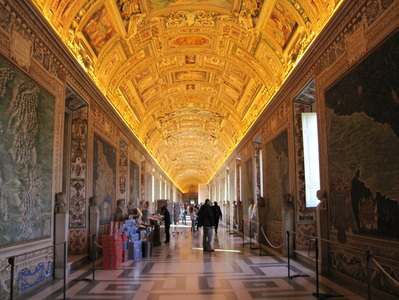
It’s one of the most incredible places in Rome and often  unfortunately seen just as a corridor, no matter how beautiful and long, to the Sistine Chapel.

In my opinion the Map Gallery is worth itself a visit to the Vatican museum.

First of all, it is over 400 years old.

Along the gallery there are 32 large maps depicting the different regions of Italy facing either the west coast, on the left inside, or the east coast, on the right end. From south leading north. The accuracy of the maps painted there is amazing if we consider the lack of technology of those days.


Read More
Comments

The Minotaur by Miron

2/7/2015

Comments

 
Picture
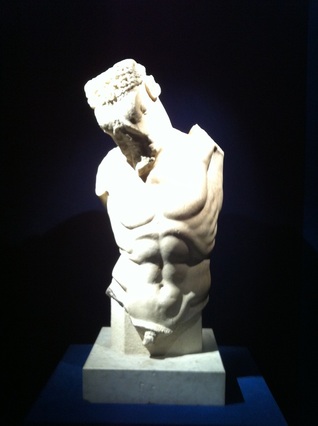
I can understand, looking at this sculpture, the fascination the minotaur’s had in the past and over the centuries.
This splendid sculpture displayed in Rome in the Palazzo Massimo museum, shows the great contrast between beauty and the wild, intellect and nature. 

The torso is really astounding while the head is so brutal!
It also depicts the inner essence of human beings, where  both  intellect or passions and violence coexist.
It was done on purpose back then, over 2000 years ago.

This is an ancient  roman copy of a sculpture by the famous Miron. The minotaur bust was part of a sculptural group depicting  Theseus fighting and eventually winning over the beast. 

The inclination of the minotaur’s head suggests he’s going to be hit by Theseus.

The mythological story is aimed to assert Athens independence over the Cretan influence.

The king of Crete’s wife got this love affair with a bull (this story deserves another blog) and gave birth to the minotaur: half man half bull.

Since the Athenians had lost a war with Crete (or had killed the son of Crete’s king Minos –there are different version of the myth),  together with the minotaur  heating only humans, the Athenians had to send 7 boys and 7 maidens to Crete to fed the beast.

Theseus, the son of Athens’s king Aegeus, went to Crete to kill the minotaur and eventually succeeded.

Palazzo Massimo Museum


Comments

The Statue of Minerva

2/7/2015

Comments

 
Picture
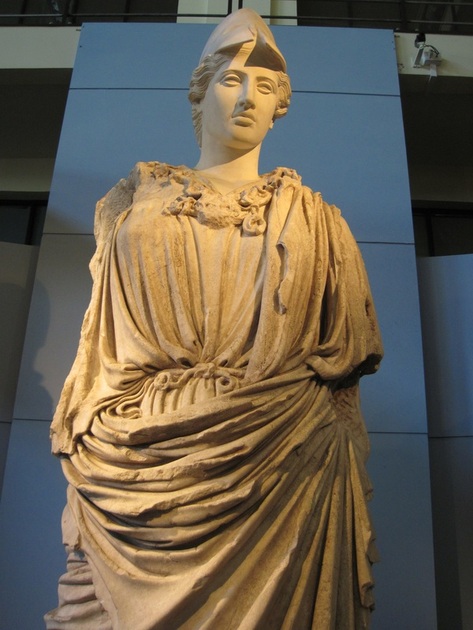
It was found in 1886 in Rome, in what is nowadays piazza Sciarra.

It’s a splendid copy of a classical Greek bronze work dating from the Vth century bc, same period as the Parthenon in Athens. 

There are similarities in style with the work of Phidias, that we’re still dreaming about…

The head is a plaster cast of another  similar statue, now in the Louvre, found in Velletri – a village on the roman hills south of Rome.

The statue was made with marble from Thassus, in Greece.


​Centrale Montemartini Museum


Comments

The Symbolism of  the Ludus Circensis. The Circus Maximus: a Model of the Cosmo

2/6/2015

Comments

 
Picture
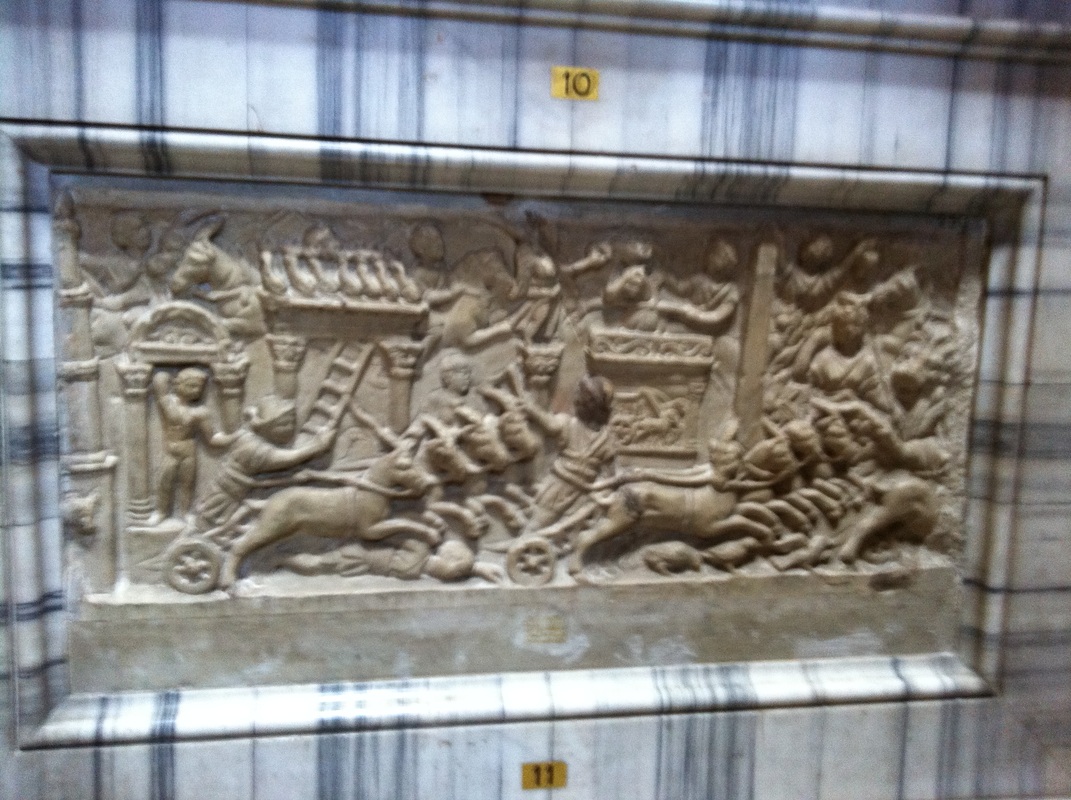
As you know in the circuses were  large valleys, with seats all around, used in the ancient roman times for chariot races.  The chariots  were  turning around a central line called ‘spina’.

The most famous hippodrome of the past is the Circus Maximus in Rome. Augustus in 10bc brought an obelisk from Egypt to decorate the ‘spina’.

The obelisks were considered, by both Egyptian and Romans, to represent the connection between the sky and the earth.

The hippodrome was a little model of the cosmos:

The obelisk was the sun, the ground represented the earth and the canal running in the middle of the spina was the sea.

The four factions of chariot raiders represented the 4 seasons.


Read More
Comments

    My Blog

    This blog is aimed to share with you my Roman experiences, reflections and researches. 

    My clients normally fall in love with Rome, as I am,  and on their way back home express the desire of knowing more about its history and artistic treasures.

    This blog is for them and for everyone else that loves beauty, history, art, curiosities…and more, even my Italian recipes!!

    Subscribe to Newsletter

    Categories

    All
    Ancient Rome
    Art & Artists
    Coliseum
    Fashion
    Food & Recipes
    History
    Holidays And Traditions
    Iconography
    News
    Pictures
    Quote
    Rome Museums
    Rome With Kids
    Sistine Chapel
    Tips
    Vatican

      What do you think?

    Submit

    Archives

    November 2019
    August 2019
    June 2019
    May 2019
    April 2019
    March 2019
    January 2019
    December 2018
    August 2018
    July 2018
    June 2018
    May 2018
    April 2018
    March 2018
    February 2018
    January 2018
    June 2017
    May 2017
    April 2017
    March 2017
    February 2017
    January 2017
    July 2016
    February 2015
    January 2015
    December 2014
    November 2014
    April 2014
    March 2014
    January 2014
    December 2013
    November 2013
    October 2013
    September 2013
    August 2013
    July 2013
    June 2013
    May 2013
    April 2013
    March 2013
    February 2013
    January 2013
    December 2012
    November 2012
    October 2012
    September 2012
    August 2012
    July 2012
    June 2012
    May 2012
    April 2012
    March 2012

  • TripAdvisor
Creative Commons License
This work is licensed under a Creative Commons Attribution 3.0 Italy License.
Ilaria Marsili MRSLRI67H50H501J . All Rights Reserved.
  • TripAdvisor
  • TripAdvisor